
The Magic Mineral Selenium: Small, Subtle—and Surprisingly Powerful

December 22, 2025
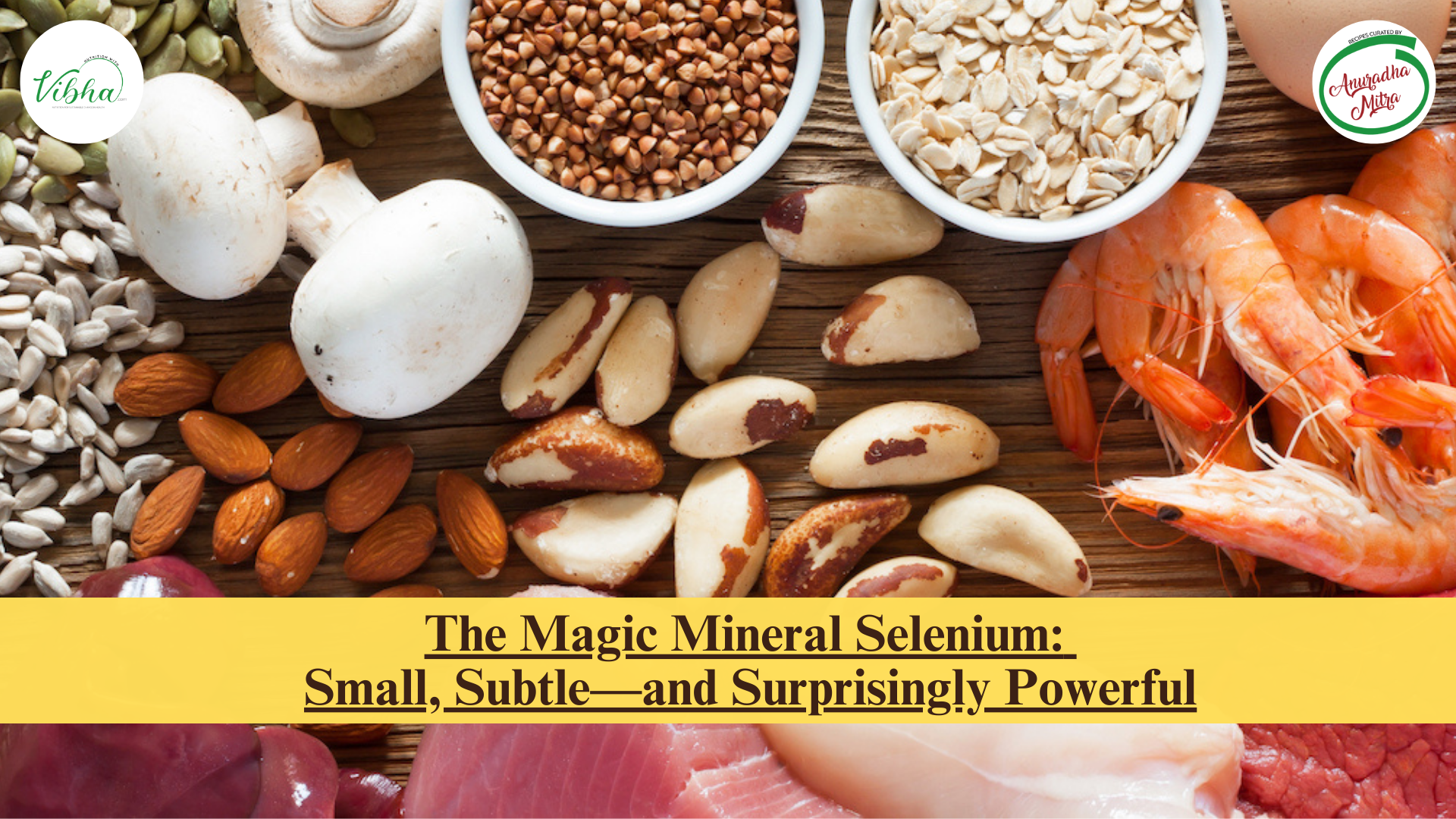
If we pause for a moment and really look at today’s health landscape, a quiet pattern begins to emerge. Many modern conditionswhether it’s a sluggish metabolism, thyroid imbalance, heart concerns, lowered immunity, or faster ageing—share two silent companions: chronic, low-grade inflammation and oxidative stress. They don’t shout. They whisper. But over time, they erode health.
This is where antioxidant defence becomes not just helpful, but essential. And among the many nutrients that support this defence system, selenium holds a uniquely important place—quiet, understated, yet deeply influential.
Why Selenium Truly Deserves Our Attention
Selenium is a trace mineral, needed only in microgram amounts. Yet its impact on the body is far greater than its size suggests.
Its true power lies in its role as a building block of selenoproteins, especially glutathione peroxidase—one of the body’s most potent antioxidant enzymes. Through this pathway, selenium helps neutralise free radicals, calm cellular inflammation, and protect tissues from oxidative damage.
But its role doesn’t stop there. Selenium supports several core systems at once:
- Thyroid health, by helping convert T4 into the active hormone T3
- Immune balance, strengthening both innate and adaptive immunity
- Metabolic efficiency, supporting energy production at the cellular level
- Reproductive health, particularly sperm quality and fertility
- Inflammation regulation, influencing pathways linked to chronic disease
When selenium intake falls short, the body doesn’t break down overnight. Instead, systems become slower, less efficient, and more vulnerable—often years before symptoms feel “serious.”
Selenium and Vitamin E: A Powerful Partnership
In nutrition, synergy matters—and selenium rarely works alone.
Its antioxidant effect is significantly enhanced when paired with Vitamin E. While selenium-dependent enzymes handle free radicals inside cells, Vitamin E protects the fat-rich cell membranes from oxidative injury. Together, they create a wider, more resilient antioxidant shield.
This is why diets that naturally combine selenium-rich foods with healthy fats—nuts, seeds, whole grains, and unrefined oils—work so beautifully at a biochemical level.
Brazil Nuts: Nature’s Most Concentrated Selenium Source
Any conversation about selenium inevitably brings us to Brazil nuts, also known as Para nuts.
They are the richest natural source of selenium known:
- Selenium content: ~1900–2000 micrograms per 100 grams
- Adult RDA: 55 micrograms per day
In practical terms, just one to two Brazil nuts a day can meet an adult’s selenium requirement.
This concentration also teaches us an important lesson: selenium is powerful. And with power comes the need for restraint. Excess intake can easily become counterproductive.
Selenium in the Indian Dietary Context
While Brazil nuts are exceptional, good nutrition never relies on a single food. A thoughtfully planned, whole-food Indian diet can provide adequate selenium over time—naturally and sustainably.
Indian dietary sources include:
- Whole wheat (atta) and brown rice
- Millets such as ragi, jowar, and bajra
- Legumes: moong dal, masoor dal, chana, rajma
- Seeds: sunflower seeds, sesame seeds
- Garlic and onions
- Mushrooms
- Spinach and other green leafy vegetables
- Dairy products like paneer and curd
- Eggs
- Fish and seafood
Minerals like selenium work cumulatively. What matters most is consistent inclusion across meals and weeks—not perfection on any single day.
Why Meal Planning Matters More Than Food Lists
Nutrition isn’t just about what we eat—it’s about how we build meals.
Pairing whole grains with legumes, using traditional tempering with garlic, adding seeds to chutneys or salads, rotating grains, and choosing minimally processed foods all quietly enhance micronutrient intake. When meals are designed with intention, selenium adequacy becomes a natural outcome of good eating habits—not a nutrient to chase.
Recognising Subtle Selenium Insufficiency
True clinical selenium deficiency is rare, but functional insufficiency is increasingly common. It often shows up quietly, through signs such as:
- Frequent infections or reduced immune resilience
- Persistent fatigue and low energy
- Brain fog or cognitive dullness
- Hair fall and brittle nails
- Muscle weakness
- Thyroid dysfunction
- Elevated inflammatory markers
Because these symptoms overlap with other nutrient imbalances, isolated symptom treatment rarely works. A broader dietary assessment is far more effective.
A Necessary Note of Caution: Hashimoto’s Thyroiditis
While selenium can be supportive for thyroid health, excess selenium may worsen autoimmune thyroid conditions, particularly Hashimoto’s thyroiditis.
In such cases, supplementation must be carefully individualised and clinically guided. With selenium, more is not better—precision is essential.
Simple, Practical Ways to Support Selenium Intake
Small culinary choices can make a meaningful difference:
- Add sunflower or sesame seeds to vegetables and dals
- Use garlic generously in everyday cooking
- Choose whole grains over refined flours
- Include eggs, paneer, or fish based on dietary preference
- Rotate grains and legumes weekly
- Add Brazil nuts in small, controlled amounts
For individuals with restricted diets, malabsorption, or increased physiological demands, a well-designed multimineral supplement may be appropriate—but selenium supplementation should always be personalised and professionally supervised.
Selenium beautifully illustrates a core truth of nutrition science: the smallest nutrients often exert the greatest influence. When dietary diversity, culinary wisdom, and scientific understanding come together, micronutrient sufficiency becomes both achievable and sustainable.
For personalised, evidence-based nutrition guidance for health and disease management, write to
nutritionwithvibha@gmail.com
We offer personalised consultations for health and disease management.
Stay Empowered.
Stay Nourished.
Stay Blessed.